Table of Contents
The chapter is separated into three areas: (1) kinds of psychological tests, (2) psychometric buildings of examinations, and (3) test individual credentials and management of tests. Where possible an initiative has been made to resolve the context of handicap determination; nonetheless, the chapter is primarily an intro to mental screening.
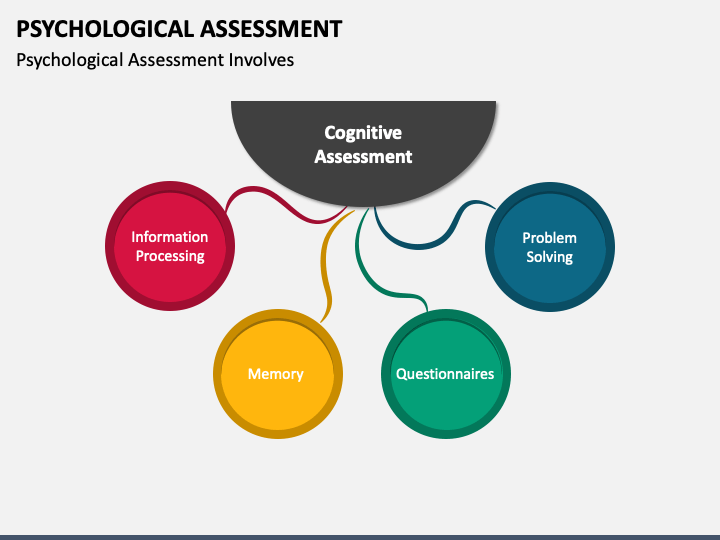
The following conversation outlines several of the distinctions among such tests; however, it is necessary to keep in mind that there is no one right cataloging of the sorts of tests due to the fact that the various classifications typically overlap. Emotional tests can be classified by the actual nature of the behavior they examine (what they measure), their management, their scoring, and just how they are used.
Procedures of regular actions, such as personality, interests, worths, and perspectives, might be described as non-cognitive procedures. A test of optimum efficiency, obviously enough, asks people to respond to inquiries and fix issues in addition to they perhaps can. Because examinations of topmost performance normally involve cognitive performance, they are typically referred to as cognitive tests.
Non-cognitive steps seldom have proper responses per se, although in some instances (e.g., employment examinations) there might be preferred feedbacks; cognitive examinations usually have items that have correct responses. It is through these two lensesnon-cognitive procedures and cognitive teststhat the board examines psychological screening for the purpose of impairment assessment in this report.
Skill Development in Psychodynamic Practice for Clinicians
A structured individuality measure, for example, may ask people true-or-false inquiries concerning whether they take part in various activities or not. Those are extremely structured questions. On the other hand, in providing some typically utilized individuality steps, the examiner offers an unstructured projective stimulation such as an inkblot or a picture.
The facility of these projective procedures is that when offered with uncertain stimuli a person will certainly project his or her underlying and unconscious motivations and perspectives. The scoring of these latter measures is commonly a lot more intricate than it is for organized measures. There is great range in cognitive examinations and what they measure, hence requiring a lengthier description.
Both kinds of examinations involve discovering. Both sort of examinations involve what the test-taker has actually found out and can do. However, accomplishment examinations typically involve discovering from really specialized education and training experiences; whereas, many capability examinations analyze learning that has actually happened in one's setting. Some facets of finding out are plainly both; as an example, vocabulary is discovered in your home, in one's social environment, and in college.
The Impact of Transference in Depth Psychology for Change
Alternatively, one can likewise have a vocabulary test based on words one discovers just in a scholastic setting. Intelligence tests are so common in numerous scientific psychology and neuropsychology circumstances that we likewise consider them as neuropsychological measures. Some abilities are determined using subtests from knowledge tests; for instance, particular working memory examinations would certainly be a typical example of a knowledge subtest that is made use of singly as well.
Some capacity examinations are broken right into spoken and efficiency examinations. Spoken tests, certainly sufficient, utilize language to ask inquiries and demonstrate answers. Performance examinations on the various other hand lessen using language; they can entail fixing troubles that do not involve language. They might include adjusting objects, tracing mazes, putting photos in the proper order, and ending up patterns.
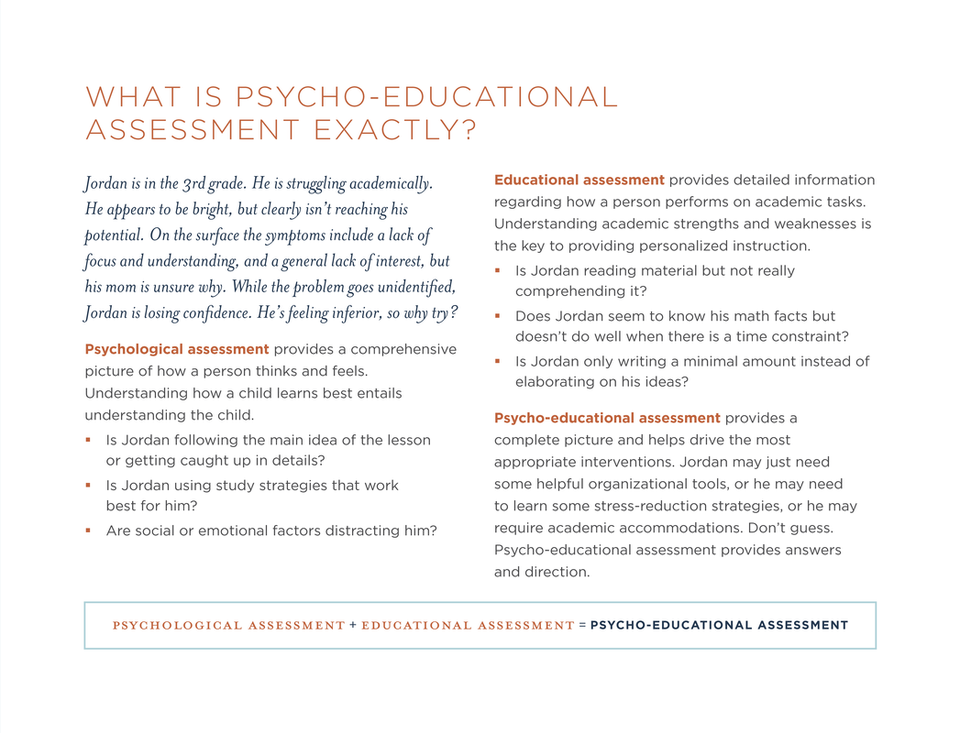
Performance examinations are likewise sometimes utilized when the test-taker does not have competence in the language of the testing. Several of these tests evaluate visual spatial tasks. Historically, nonverbal steps were offered as knowledge examinations for non-English talking soldiers in the United States as early as World war. These tests remain to be used in academic and clinical setups offered their reduced language element.
A really speeded test is one that everybody could obtain every concern right if they had enough time. Some tests of clerical abilities are precisely similar to this; they might have two lists of paired numbers, for example, where some pairings include 2 identical numbers and other pairings are various. The test-taker simply circles around the pairings that are identical.
Finding the Best Psychoanalyst in Chicago
A real power examination is one where all test-takers have adequate time to do their ideal; the only concern is what they can do. Obviously, few tests are either simply sped up or totally power tests.
When test-takers have impairments that impact their capacity to react to questions promptly, some measures give added time, relying on their function and the nature of the characteristics being evaluated. Inquiries on both success and capability examinations can involve either acknowledgment or free-response in answering. In academic and intelligence tests, acknowledgment examinations typically consist of multiple-choice questions where one can seek the right response amongst the alternatives, acknowledge it as appropriate, and choose it as the proper response.

Navigation
Latest Posts
Addressing Bonding Trauma Via Family Therapy for Adult Children & Parents
Exercise Addiction Relationship to Control Issues
Transforming Inherited Trauma in Asian American Communities